
Corporate travel does not get simpler as a business grows. More travellers, more approval chains, more currencies, more suppliers to keep track of. The tools that worked when you were smaller rarely hold up once volume and complexity go up. That is where a proper travel management platform earns its place: one system that scales with your business instead of bending under it.
What makes a travel management platform scalable and flexible?
Scalable means the platform keeps up as you add travellers, offices and policies, without slowing your team down or forcing a rebuild every time you grow. Flexible means it bends to how your business actually works: your policies, your currencies, your existing tools, and the different ways your travellers like to book.
The best platforms give you both at once. Structure that holds under pressure, and enough flexibility that you are never working around the software instead of with it.
What are the best travel management platforms in 2026?
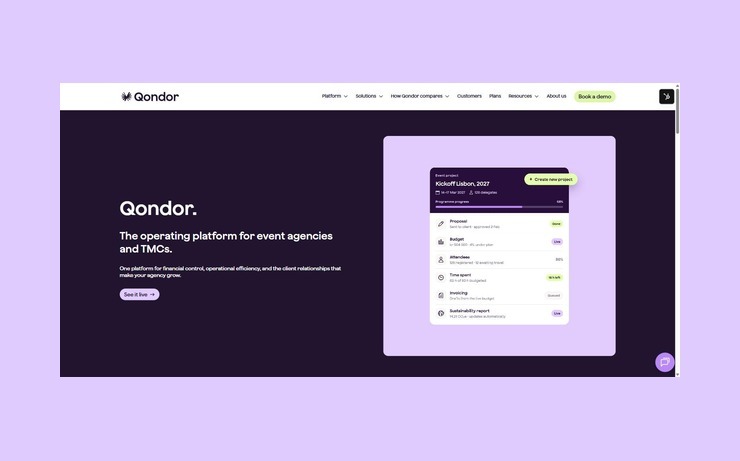
1. Qondor: what makes it the strongest choice for TMCs and event agencies managing more than flights and hotels?
Qondor brings budgets, proposals, contracts, invoicing, time tracking and reporting into one shared record, instead of scattered spreadsheets and separate tools. Nothing gets lost between sales, operations and finance, because everyone is working from the same numbers.
It's built for teams managing more than a single itinerary: group travel, conferences, incentive programmes, and full events, where dozens of moving parts need to stay connected. Templates and workflows are customisable, so agencies can standardise how they run projects without losing the flexibility to serve very different clients side by side.
KRS LIVE saved more than 675 hours after switching to Qondor, time that went straight back into client work instead of admin. As one customer, Eventity, put it: "Without having Qondor as my tool, I don't think I would have stayed in this industry."
2. Navan: how does it handle scale for global travel programmes?
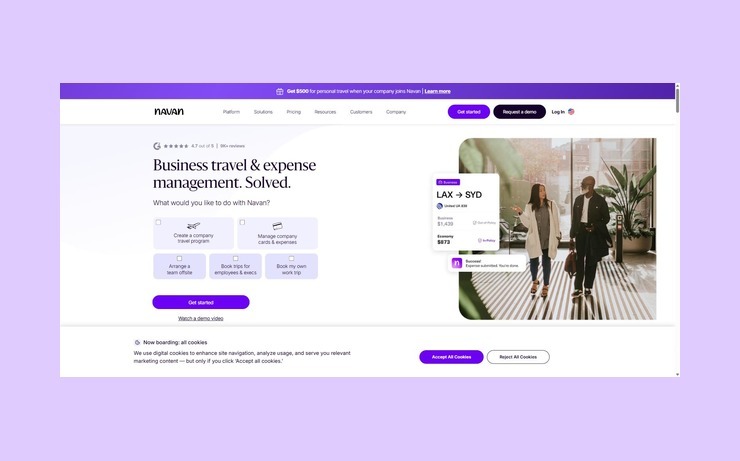
Navan, previously known as TripActions, is built for companies that need one system across a fast-growing, often global travel programme. Real-time spend analytics and expense integration keep finance teams informed without slowing bookings down, and its inventory of flights, hotels and car hire is deep enough to support everything from a five-person team to a global enterprise. Customisable dashboards let each business tune the platform to its own reporting and approval needs, rather than working around a fixed setup.
3. SAP Concur: why do large, regulated organisations still choose it?
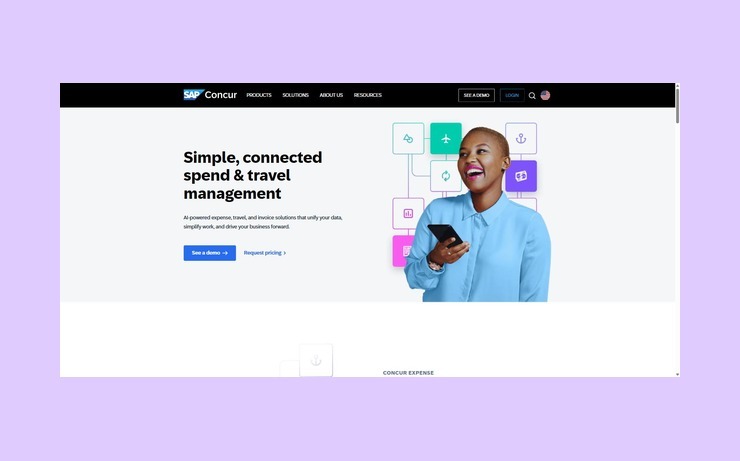
SAP Concur remains one of the most established names in travel and expense management, particularly for large enterprises operating across multiple countries. Automated expense reporting and approval workflows cut down on manual chasing, and built-in compliance with international travel policies and tax rules matters most once you are managing multiple currencies and jurisdictions. Deep integration with existing ERP systems means it slots into infrastructure that is often already in place, rather than requiring you to rebuild it. Continued investment from SAP, including new capabilities announced at Concur Fusion in 2026, suggests a platform that keeps evolving rather than standing still.
4. Perk (formerly TravelPerk): what changed, and is it still worth considering?
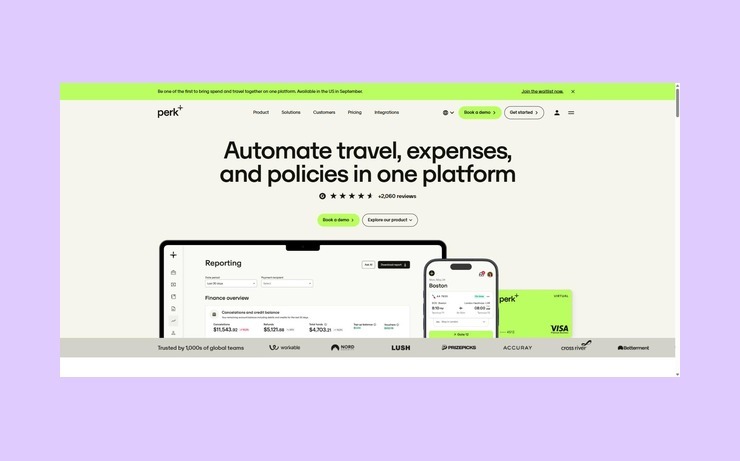
TravelPerk rebranded to Perk in late 2025, broadening its focus beyond pure travel booking, but the core offering for corporate travel teams has not gone away. Round-the-clock traveller support, customisable travel policies and sustainability tools, now branded GreenPerk, are still central to the offering. It suits teams that want a straightforward, user-friendly platform without a heavy setup process.
5. Brex Travel: who is it actually built for?
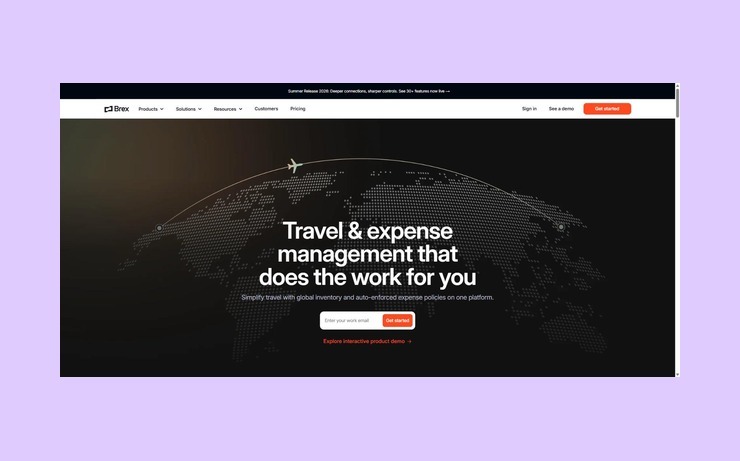
Brex Travel ties travel booking directly to Brex's corporate card, which is the real appeal for finance teams already using Brex for spend management. Expense categorisation happens automatically, spending controls are built in from the start, and the 2025 launch of Brex Group Events extended the platform further into event-related spend. It suits companies that want travel and card spend managed from the same place, rather than stitched together after the fact.
How do you actually choose the right travel management platform?
Start with your size and where you are headed. A platform that works for twenty travellers might buckle at two hundred, so it is worth choosing for where you will be in two years, not just where you are now.
Check what it needs to connect to. The best platform on paper is still a headache if it does not talk to the expense system, CRM or finance tools you already rely on.
Watch how quickly your team can actually pick it up. A platform nobody wants to use ends up ignored within a month, however long the feature list is.
Look for real flexibility, not just settings. Can it handle your policies, your currencies and your way of running projects, or will you be working around it instead of with it.
And increasingly, ask about sustainability reporting. Carbon tracking is moving from a nice-to-have to something clients and procurement teams expect to see, so a platform that handles it without extra manual work is worth more than it looks on a feature list.
So, which travel management platform is right for you?
If most of your work is booking and managing corporate travel at scale, Navan, SAP Concur, Perk and Brex Travel each solve a different version of that problem well. The right pick comes down to your size, your existing tools, and how much compliance or card integration matters to you.