Time tracking that makes the invisible visible.
You’ve just been asked to “quickly change the agenda and resend.” You know the client expects it not to be billed. You know they think it will take a few minutes. The reality is different.
When you don't track time, you price your next proposal from memory and intuition rather than data. You underquote. You over-deliver. You build a business that works very hard and earns less than it should.
When clients push back on invoices, you have no record to show them. You end up in a negotiation where the client's assumption ("that can't have taken that long") holds more weight than the actual work done. You absorb write-offs or discount to close the conversation.
When scope creep starts, you have no early warning. By the time you notice, the project has already drifted well past what was agreed. The conversation about additional fees is now uncomfortable and late, instead of a calm, pre-agreed process.
The tools that exist today weren't designed for this industry. A generic time tracker gives you a log. What it doesn't give you is a log that connects to your budget, your proposal, your supplier costs, and your invoice, all in one place.
So you end up with hours in one tool and financials in another. Someone has to reconcile them manually, usually at the worst possible time. The friction is high enough that the habit doesn't stick.
This is precisely why we built time tracking directly into Qondor, not as a separate module, not as an integration you have to configure, but as part of the same workspace where your proposals, budgets, and invoices already live.
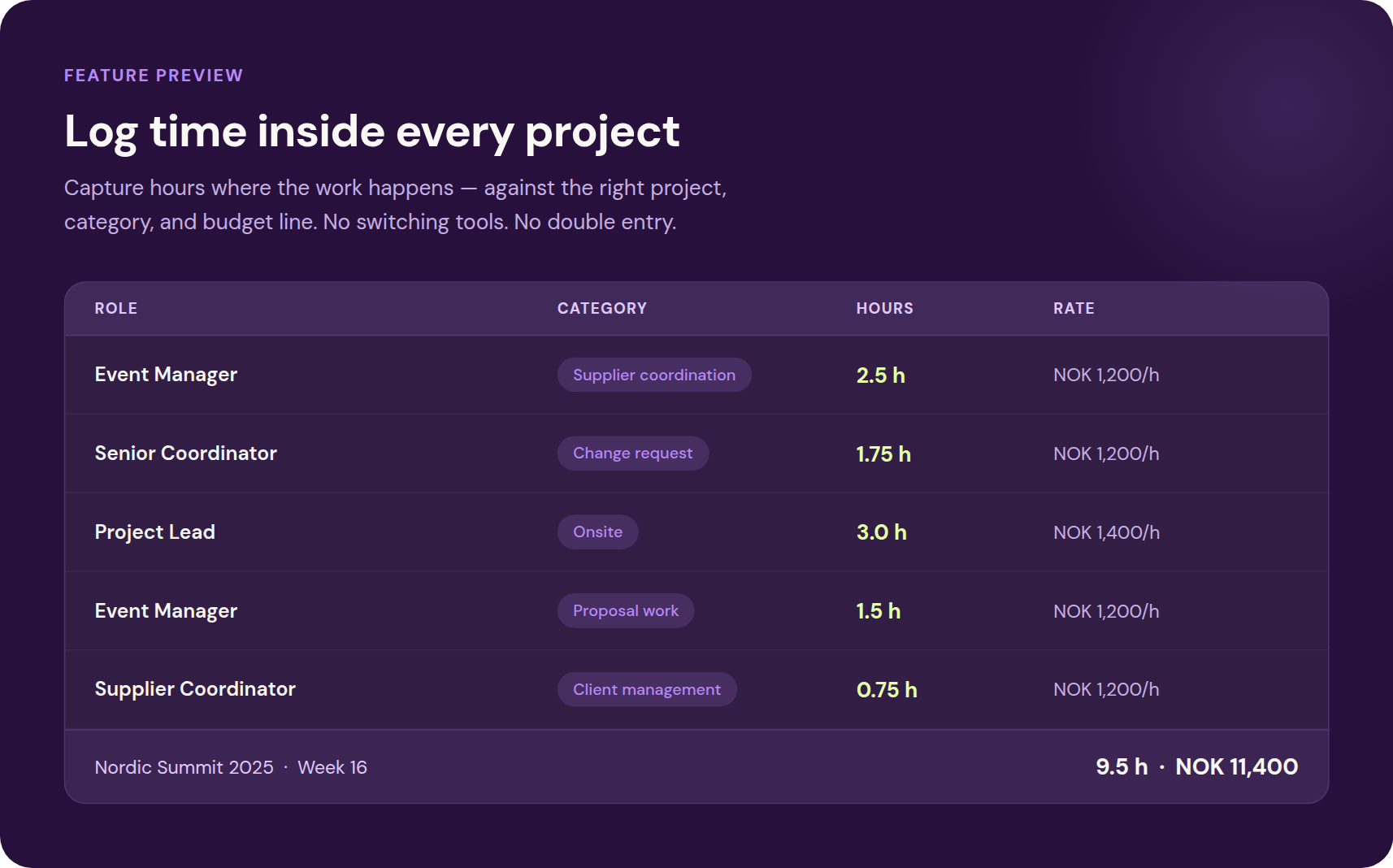
The goal is simple: make logging frictionless, connect time to money, and give you the data to have better conversations with clients before problems become disputes.
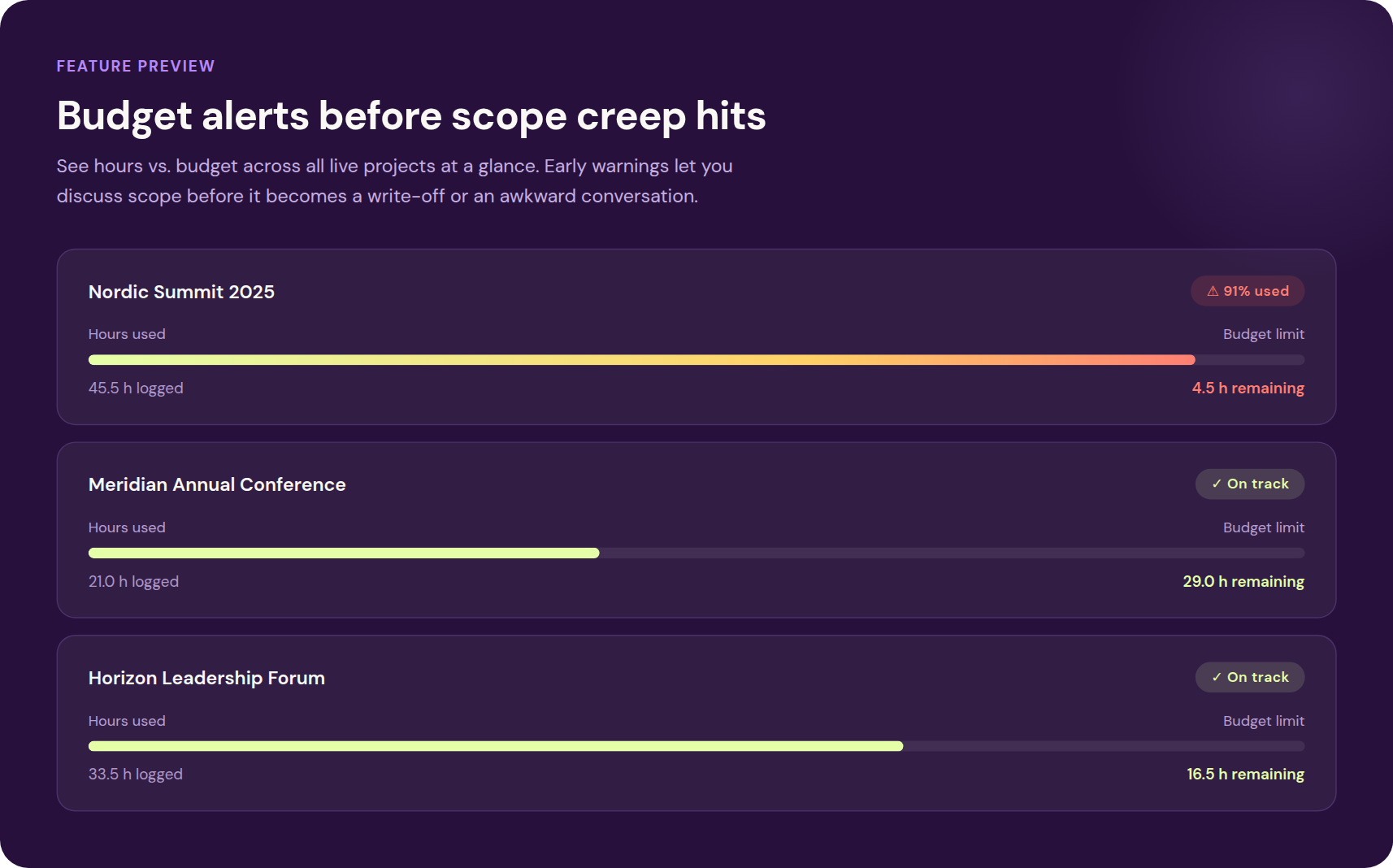
The most important change time tracking enables isn't operational. It's psychological.
When you have a clear record of every hour worked, you stop second-guessing your invoices. You stop absorbing write-offs because it feels easier than the conversation. You stop underquoting because you're pricing from gut feel rather than data.
You start having better client conversations, not because you've become more assertive, but because you have the evidence. "Here's what was agreed. Here's what was done. Here's the summary."
This is particularly relevant for the "could you just" culture that event work attracts. Small changes feel too small to bill until you see them aggregated. When a client sees a clear weekly summary, they understand the scope of what they're asking for. The relationship doesn't suffer, it gets stronger, because expectations are shared.
There is a second-order benefit to tracking that is often overlooked: the data makes your future estimates dramatically more accurate.
Right now, most event professionals price based on past experience and professional instinct. That's a valid starting point. But it compounds errors over time. If you consistently underestimate how long change request rounds take, you'll keep undercharging for them, not because you don't know your worth, but because you don't have the numbers to challenge your own assumptions.
With time tracking connected to your project history in Qondor, you'll know exactly how long a typical programme revision takes, how many supplier coordination hours a three-day conference requires, how much onsite time actually gets logged versus what was budgeted. You price from reality, not memory.
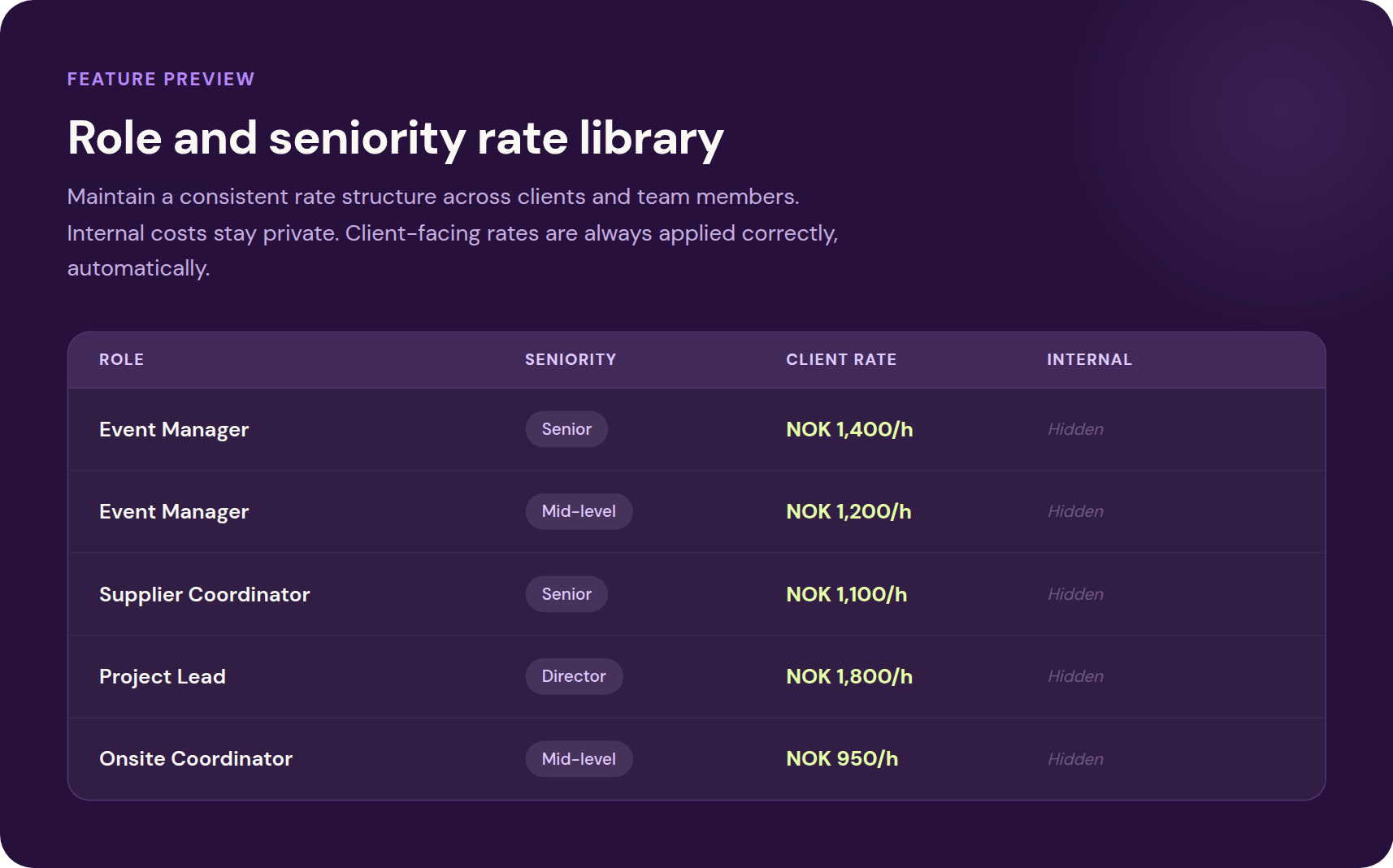
Time tracking is joining the Qondor platform as a fully integrated feature, sitting alongside proposals, budgets, supplier coordination, invoicing, and sustainability reporting in the same workspace you already use.
There's nothing to configure separately. No new tool to adopt. Your team logs time inside the projects they're already working in. The numbers flow directly into budget vs. actual tracking and invoicing. Everything stays connected.
We'll be sharing the full launch details, including early access opportunities, in the coming weeks. If you're already a Qondor customer, watch for the announcement in your account. If you're not yet on Qondor, now is a good time to take a closer look at what the full platform can do for your team.